25 Indian Startup Shutdowns That Shaped the Ecosystem in 2025
Fri Dec 26 2025
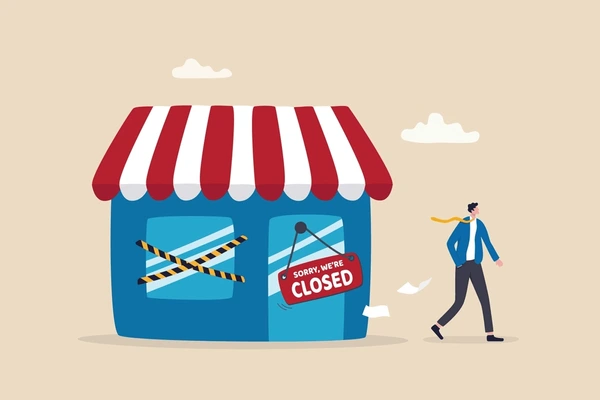
The year 2025 proved to be a defining—and difficult—period for India’s startup ecosystem. At least 25 Indian startups shut down operations across sectors such as fintech, agritech, consumer internet, enterprise SaaS, EV mobility, AI, and quick commerce.
While India remains one of the world’s most vibrant startup hubs, these shutdowns exposed a growing gap between ambitious growth narratives and sustainable business fundamentals. Funding constraints, regulatory pressure, high operating costs, governance issues, and weakening consumer demand all played a role.
Unlike earlier cycles where rapid scale was rewarded, 2025 marked a clear shift toward profitability, capital efficiency, and execution rigor—a transition many young ventures struggled to survive.
Funding Slowdown Pressured Early- and Growth-Stage Startups
A prolonged funding slowdown was the most common trigger behind shutdowns.
Investors became far more selective, prioritising:
- Predictable revenues
- Strong unit economics
- Clear paths to profitability
Several startups with live products and early traction failed to raise follow-on rounds.
- BharatAgri shut down after failing to close a critical funding round.
- Blip, a quick-commerce fashion startup promising instant apparel delivery, collapsed under high burn rates and thin margins.
- CodeParrot, a developer productivity startup, struggled with monetisation despite strong early visibility.
In many cases, ambition outpaced execution capacity, and capital discipline arrived too late.
Snapshot: Indian Startup Shutdowns in 2025
| Startup | Sector | Founded | Primary Reason for Shutdown |
|---|---|---|---|
| Altigreen | Electric Vehicles | 2017 | Mounting losses, no fresh capital |
| ANS Commerce | SaaS / Ecommerce | 2017 | Post-acquisition shutdown |
| Astra | AI / Enterprise Tech | 2021 | Co-founder disputes |
| BeepKart | Used Mobility | 2020 | Thin margins, high ops costs |
| BharatAgri | Agritech | 2017 | Failed fundraising |
| Blip | Quick Commerce | 2024 | Capital shortage |
| BluSmart | EV Ride-Hailing | 2019 | Financial irregularities |
| Builder.ai | No-Code Software | 2016 | Insolvency |
| CodeParrot | Developer Tools | 2023 | High burn, no follow-on |
| CrickPe | Gaming | 2021 | GST & regulatory impact |
| Dunzo | Hyperlocal Delivery | 2014 | Heavy losses |
| GenWise | Elder Care Tech | 2022 | Weak revenue conversion |
| Good Glamm Group | Beauty & Media | 2015 | Aggressive expansion |
| Hike | Consumer Internet | 2012 | Gaming policy restrictions |
| leap.club | Community Platform | 2020 | Retention issues |
| Log9 Materials | Battery Tech | 2015 | Tech scale & debt |
| Niro | Fintech | 2021 | Tighter lending norms |
| O’Be Cocktails | Consumer Beverages | 2020 | Market saturation |
| Ohm Mobility | EV Financing | 2020 | Unclear model |
| Otipy | Agritech Commerce | 2020 | Failed fundraising |
| Plus Gold | Fintech | 2022 | Weak unit economics |
| subtl.ai | AI SaaS | 2021 | Capital constraints |
| Wherehouse.io | Supply Chain Tech | 2021 | Legal issues |
| Zing | Quick Food Delivery | 2023 | Overestimated demand |
| Zoplar | Healthtech | 2014 | Regulatory ban |
High-Profile Shutdowns Raised Systemic Concerns
Some shutdowns had outsized impact due to scale and visibility.
BluSmart, once positioned as a serious EV alternative to traditional ride-hailing, exited amid governance failures and insolvency—impacting drivers, employees, and customers.
Hike, a long-standing consumer internet brand, struggled under real-money gaming restrictions and policy uncertainty, reinforcing how regulatory risk can override brand strength.
These cases highlighted a hard truth: funding and recognition do not compensate for weak controls or policy exposure.
Regulatory and Industry Pressures Intensified
Fintech startups were among the hardest hit.
- Niro cited tighter lending norms and worsening credit cycles.
- Gaming startups like CrickPe and Hike suffered from GST and policy changes.
- Consumer brands such as O’Be Cocktails struggled with rising CACs and low pricing power.
Across sectors, regulation became as important as product-market fit.
What the 2025 Shutdowns Mean for Founders and Investors
Key lessons from 2025:
- Growth without profitability is no longer rewarded
- Regulatory awareness is mission-critical
- Governance and capital efficiency matter as much as vision
For founders, resilience and adaptability proved essential.
For investors, the year reinforced the need for deeper diligence, realistic timelines, and sustainable expectations.
Final Takeaway: A Necessary Reset
While 2025 saw painful shutdowns, it also marked a reset phase for India’s startup ecosystem.
Innovation remains strong—but the bar has shifted decisively toward:
- Sustainable models
- Disciplined execution
- Long-term value creation
Rather than signalling decline, these shutdowns may ultimately strengthen the ecosystem, filtering out fragile models and pushing survivors toward more durable foundations.
India’s startup story continues—but 2025 made one thing clear: only strong fundamentals endure.
Fri Dec 26 2025